

Proposing a Novel Therapeutic Drug for Tuberculosis Using High-Precision Molecular Simulation
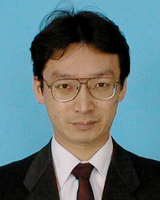
A Novel Compound Designed to Inhibit Cytochrome P450 Function and Suppress Drug Metabolism Noriyuki Kurita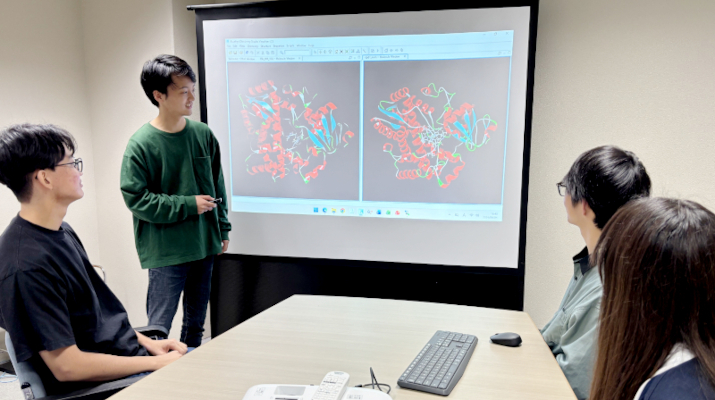
A research team led by Associate Professor Noriyuki Kurita from the Department of Computer Science and Engineering at Toyohashi University of Technology and by Associate Professor Pornpan Pungpo from Ubon Ratchathani University in Thailand has proposed a novel therapeutic agent for tuberculosis, using high-precision molecular simulation techniques. The proposed drug is anticipated to bind strongly to the drug-metabolizing enzyme cytochrome P450 (CYP), thereby inhibiting excessive CYP-mediated metabolism and preventing the degradation of co-administered drugs. Additionally, because this agent targets enzymes released by the tuberculosis bacterium rather than the bacterium itself, the likelihood of bacterial mutation and resistance development is reduced, suggesting sustained therapeutic efficacy over an extended period.
Mycobacterium tuberculosis infection remains one of the most dangerous infectious diseases globally, prompting the development of various therapeutic agents. Rifampicin, one of such drugs, induces the drug-metabolizing enzyme cytochrome P450 (CYP), which accelerates the degradation of co-administered drugs and diminishes their efficacy. Consequently, there is a critical need to develop compounds that inhibit excessive CYP-mediated metabolism. Previous studies have identified the heme group as the active site of CYP and demonstrated that the coordination bond between the central heme iron and inhibitors is essential for CYP inhibition. Conventional molecular simulations have struggled to accurately reproduce this coordination bond. In response, this study constructed a novel molecular force field that incorporates coordination bonding and charge transfer around the heme iron, successfully reproducing the experimentally observed structure of a CYP-inhibitor complex [Publication Information 1]. Additionally, the fragment molecular orbital (FMO) method was employed to analyze the electronic-structure binding characteristics between CYP and the inhibitor, thereby identifying the amino acid residues critical for inhibitor binding to CYP, as illustrated in the accompanying figure.
In this study [Publication Information 2], in collaboration with researchers in Thailand, various substituents were introduced at the positions indicated by the red circle in the figure to systematically identify candidate compounds with enhanced binding affinity for CYP and improved inhibitory potential. Eleven novel compounds exhibiting favorable drug properties and low toxicity were selected as candidates. Utilizing an advanced molecular simulation method and supercomputing resources, the binding characteristics of CYP with these novel compounds were analyzed. Results demonstrated that two of the novel compounds exhibit stronger binding to CYP than existing inhibitors and are expected to be effective CYP inhibitors.
Mr. Nagura and Miss Chimura, both master's students and lead authors of the two published papers, reflect on their experience: "The CYP protein targeted in this research contains heme iron in its active site; thus, molecular simulation capable of accurately describing the binding state around the iron was essential. However, conventional classical calculation methods could not reproduce the experimental structure, and we encountered significant challenges in developing a method that accurately accounted for the coordination bonds and charge distribution around iron. Furthermore, when analyzing the binding properties between various compounds and CYP using the new method, we benefited greatly from the advice of the professor and students at our joint research laboratory in Thailand, which enabled us to search for new compounds more efficiently. I believe that spending two months at the research laboratory in Thailand and engaging in collaborative research through direct discussions contributed substantially to the success of this project."
The novel molecular simulation method proposed in this paper will be applied to additional enzyme proteins to identify new compounds that effectively inhibit their function. These compounds will be synthesized in a laboratory in Thailand, and their inhibitory effects will be evaluated through cell-based experiments. To expedite this collaborative research, Associate Professor Kurita and the laboratory's graduate students will visit the Thai laboratory to develop a detailed research implementation plan. Collaborative research and student exchanges with the Thai laboratory have been ongoing for over 10 years. These exchanges are expected to continue, contributing to the development of new tuberculosis therapies.
This research was conducted through the International Internship Program of the Japan Student Services Organization (JASSO) and the Student Exchange and Research Exchange Program between Toyohashi University of Technology and Ubon Ratchathani University in Thailand. We thank Associate Professor Pornpan Pungpo of the Department of Chemistry, Faculty of Science, Ubon Ratchathani University, and the graduate students in her laboratory for their valuable contributions to this collaborative research. Additionally, part of this research was carried out as an activity of the FMO Drug Discovery Consortium, and the computational results were obtained using the supercomputer Fugaku of RIKEN in Japan (Project Number: hp250154).
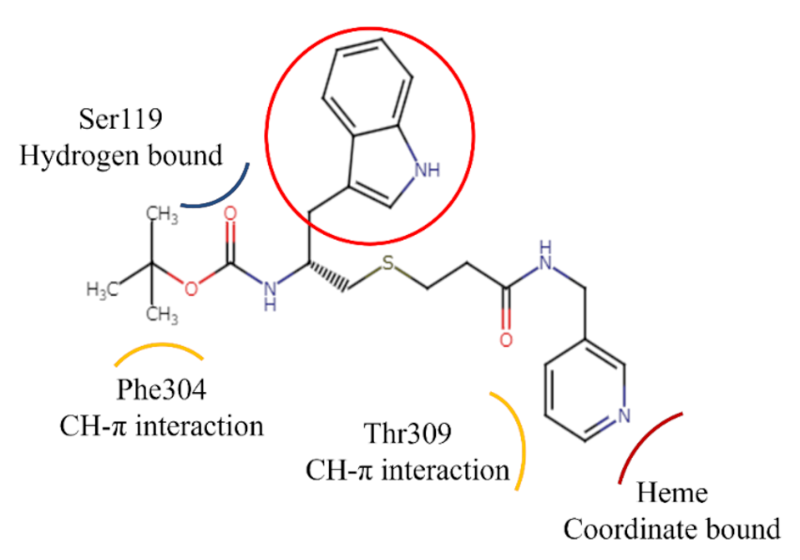
Figure Caption: Red, blue, and yellow lines represent sites for coordination bonds with heme iron, hydrogen bonds with residues, and CH-π bonds, respectively. The red circle marks the site for introducing substituents when searching for novel compounds based on inhibitor 15b.
Reference
[1] Nagura, Y., Sabishiro, H., Chimura, N., Yuguchi, M., Tada, N., Takimoto, D., and Kurita, N. (2024). Modification of MM force fields around heme-Fe in the CYP-ligand complex and ab initio FMO calculations for the complex, J. Mol. Graph. Model., 133, 108875. doi:10.1016/j.jmgm.2024.108875.
[2] Chimura, N., Takenaka, S., Sawada, Y., Nakatani, C., Yuguchi, M., Ono, A., Sawatdee, K., Pornprom, T., Thongdee, P., Phakamwong, B., Pungpo, P., and Kurita, N. (2026). Proposal of novel CYP3A4 inhibitors: Molecular simulations based on molecular mechanics and ab initio fragment molecular orbital methods, In Silico Research in Biomedicine, 2, 100373.
doi:10.1016/j.insi.2026.100373.
高精度分子シミュレーションを駆使して結核の新規治療薬を提案
薬物代謝酵素シトクロムP450の機能を阻害し、薬物代謝を抑制する新薬を提案 栗田典之豊橋技術科学大学情報・知能工学系の栗田典之准教授とタイ国立ウボンラチャタニー大学のPornpan Pungpo准教授の研究チームは、高精度分子シミュレーション手法を用い、結核に対する新規治療薬を提案しました。この治療薬は、薬物代謝酵素シトクロムP450 (CYP)に強く結合し、その過剰な代謝機能を阻害し、併用する薬が分解されることを防ぐ機能を持つと期待できます。さらに、この薬は結核菌自体ではなく、結核菌が排出する酵素に作用するため、結核菌が変異して既存の薬に対して耐性を持つことが起こり難く、その効果が長期間有効な薬になると期待できます。
結核菌による感染症は、これまで世界中で最も危険視された感染症の一つであり、結核に対する様々な治療薬が開発されて来ました。その一つであるリファンピシンは薬物代謝酵素CYPを誘導し、併用する薬の分解を促進しその効果を下げてしまう副作用があります。そのため、CYPの過剰な代謝機能を阻害する薬の開発が求められています。これまでの実験により、CYPの活性中心にはヘムと呼ばれる活性部位が存在し、その中心にあるヘム鉄と阻害薬との間に生じる配位結合が、CYP機能の阻害に重要であることが判明しています。しかし、従来の分子シミュレーションでは、この配位結合を正確に再現することが困難でした。そこで本研究では、ヘム鉄周囲の配位結合及び電荷移動を考慮した分子力場を新たに構築し、CYPと既存の阻害薬から成る複合体に関して、実験で得られた構造を再現することに成功しました。さらに、フラグメント分子軌道(FMO)法を用いて、CYPと阻害薬間の結合特性を電子レベルで高精度に解析し、その結果を基に、図に示すように、阻害薬とCYP間の結合に重要なCYPのアミノ酸残基を決定しました。
今回の研究では、図の赤丸で示す位置に様々な置換基を導入し、CYPにより強く結合しその機能を阻害する阻害薬の候補化合物を、タイの研究者と共同で網羅的に探索し、その中から薬として適切な特性を有し、且つ毒性が低い11種類の新規化合物を候補化合物として決定しました。さらに、新たに開発した分子シミュレーション手法とスーパーコンピュータを駆使し、CYPと新規化合物間の結合特性を解析し、その中の2種類の新規化合物が既存の阻害薬よりも強くCYPに結合することを明らかにしました。これらの新規化合物は、CYPに対して有効な阻害薬になることが期待できます。
今回発表した2編の論文の筆頭著者である博士前期課程修了の名倉さん、地村さんは、以下のように、当時を振り返っています。「今回の研究でターゲットとしたCYPというタンパク質は、活性部位にヘム鉄を含み、鉄の周囲の結合状態を正しく記述出来る分子シミュレーションが必要不可欠でしたが、従来の古典的な計算手法では実験構造を再現出来ず、鉄周囲の配位結合と電荷分布を詳細に考慮した手法を構築することに苦心しました。また、新たな手法を用いて、様々な化合物とCYP間の結合特性を解析する際、タイの共同研究室の先生と学生から多くのアドバイスを頂き、新規化合物をより効率的に探索することが出来ました。実際、タイの研究室に2ヶ月間滞在し、直接議論しながら共同研究が出来たことが、今回の研究の成功に大きなプラスになったと思います。」
現在、この論文中で提案した新たな分子シミュレーション手法を他の酵素タンパク質に適用し、その酵素の機能を効果的に阻害可能な新規化合物を提案し、タイの研究室で合成し、細胞実験によりその阻害効果を調べる計画を立てています。この共同研究を加速する目的で、栗田准教授と研究室の大学院学生が実際にタイの研究室を訪問し、具体的な研究実施計画を立てる予定です。タイの研究室とは、これまでに10年以上、共同研究及び学生交流を行って来ましたので、今後も交流を継続して、結核に対する新規治療薬の開発に繋げたいと考えています。
本研究は、日本学生支援機構(JASSO)による国際インターンシッププログラム、及び豊橋技術科学大学とタイ国立ウボンラチャタニー大学間の学生交流及び研究交流プログラムによって実施されました。この共同研究を進める上で、貴重な情報を提供して頂いたウボンラチャタニー大学理学部化学科のPornpan Pungpo准教授及び研究室の大学院学生に感謝致します。また、本研究の一部は、FMO創薬コンソーシアムの活動の一環として実施され、スーパーコンピュータ「富岳」を利用した計算結果です(課題番号 : hp250154)。
Researcher Profile
| Name | Noriyuki Kurita |
|---|---|
| Affiliation | Department of Computer Science and Engineering |
| Title | Associate Professor |
| Fields of Research | Quantum biology / Computational science / Biological information science |
