

Xun SHAO
| Affiliation | Department of Electrical and Electronic Information Engineering |
|---|---|
| Title | Associate Professor |
| Fields of Research | Computer Networks, Distributed Systems, Machine Learning |
| Degree | Ph.D. (Osaka University) |
| Academic Societies | IEEE Senior Member |
| shao.xun.ls@ Please append "tut.jp" to the end of the address above. |
|
| Laboratory website URL | https://comm.ee.tut.ac.jp/ss-lab |
| Researcher information URL(researchmap) | Researcher information |
Research
Our research focuses on designing AI systems that operate effectively under constrained environments, including limited computation, communication bandwidth, and privacy requirements. We assume execution on edge devices and develop methods that adapt AI behavior to network conditions and real-world application demands. Rather than treating computing, communication, and AI separately, we aim to jointly optimize them in an integrated manner.
Theme1:Foundation - Edge AI & On-device Intelligence
Overview
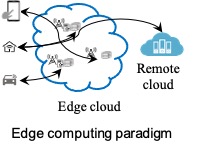
Adaptive Edge Intelligence (Core)
Objective: To realize intelligent systems that operate directly on devices and adapt to constraints such as computation, and communication.
Novelty: Establish design principles that dynamically optimize models, representations, and computation partitioning based on resource and network conditions.
Methods: Model compression, edge-cloud collaboration, federated learning, and uncertainty-aware inference and control.
Results: Prototypes satisfying real-time performance, computational efficiency, and energy constraints, validated via simulation and small-scale demonstrations.
Next: Extend toward context-adaptive AI that integrates communication and application requirements.
Keywords
Edge AI, On-device inference, Model compression, Edge-cloud collaboration, Federated learning, Privacy-aware AI
Selected publications and works
https://scholar.google.co.jp/citations?user=53ub8A4AAAAJ&hl=ja
Theme2:Network-Aware AI
Overview
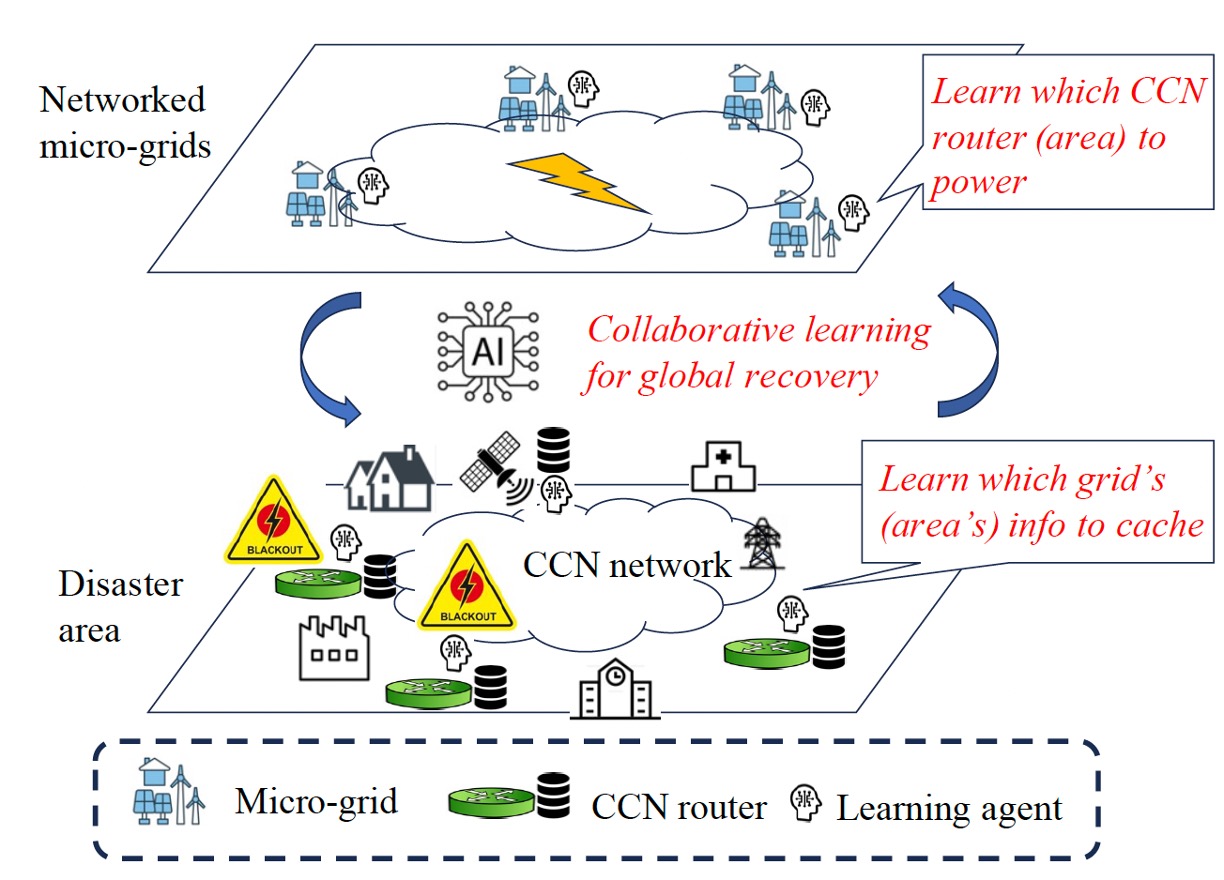
Objective: To design AI systems that optimize computation and representation based on dynamic network conditions.
Novelty: Jointly consider communication, inference, and control to enable resilient operation under failures, congestion, and variability.
Methods: Distributed optimization, reinforcement learning, graph neural networks (GNN), and service function chain (SFC) placement.
Results: Quantitative evaluation of latency, reliability, and cost under network constraints, along with systematic design of adaptive policies.
Next: Develop unified frameworks that dynamically optimize computation, communication, and information representation.
Keywords
Network-aware AI, Distributed systems, Resilience, QoS/QoE, Distributed optimization, Traffic engineering, SFC placement
Selected publications and works
https://scholar.google.co.jp/citations?user=53ub8A4AAAAJ&hl=ja
Keywords
Theme3:Real-World Applications
Overview
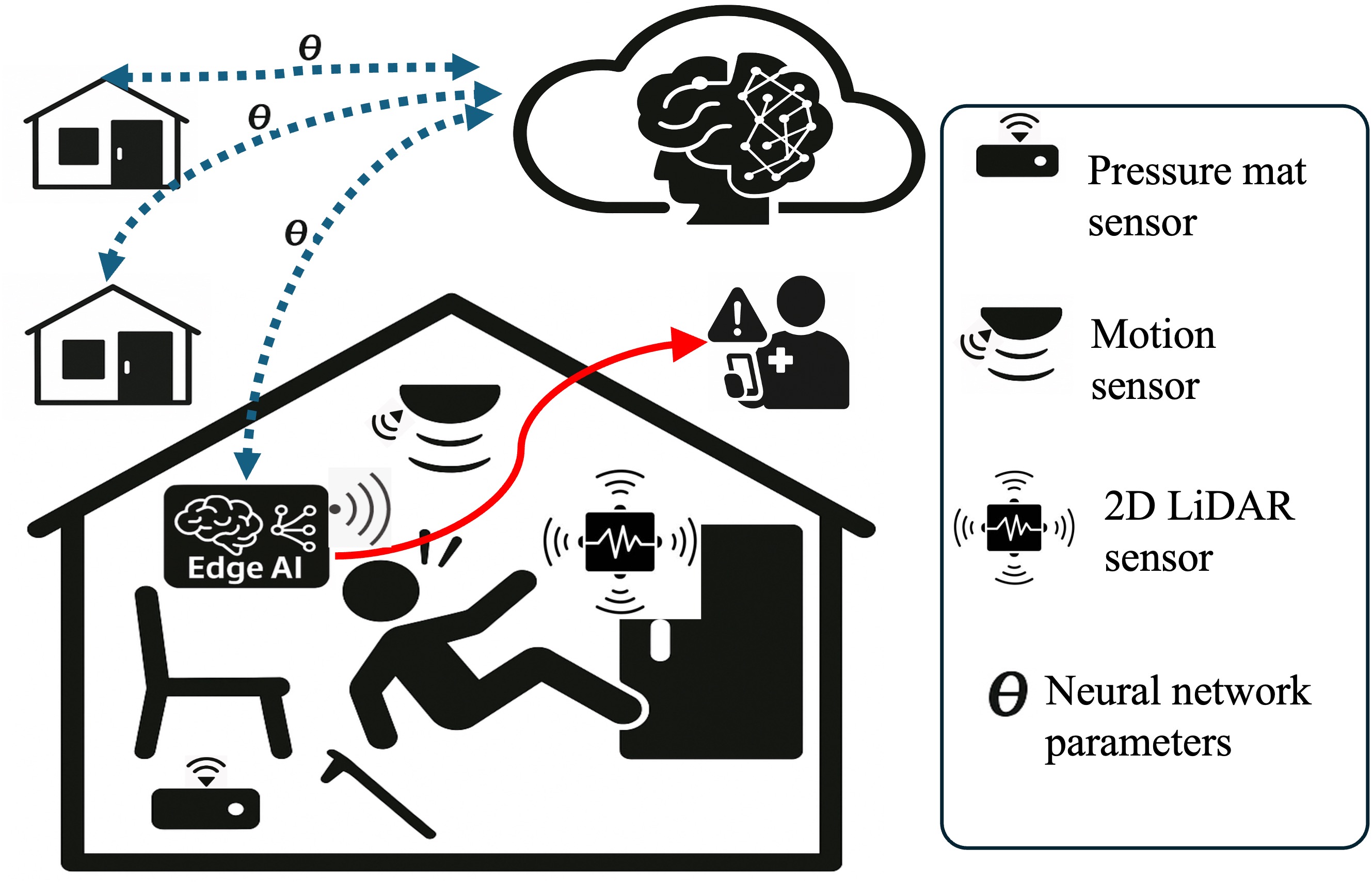
Objective: To build practical intelligent systems for real-world environments such as AgeTech and IoT under realistic constraints.
Novelty: Map heterogeneous sensor data (e.g., LiDAR, microwave, pressure sensors) into shared semantic representations robust to missing data, non-IID conditions, and privacy constraints.
Methods: Semantic representation learning, privacy-preserving learning, real-time edge inference, and adaptive operation based on network and energy conditions.
Results: Validation through public datasets, simulation, and small-scale prototyping toward real deployment.
Next: Extend toward resilient systems that remain functional under disruptions such as disasters or network congestion.
Keywords
AgeTech, Assistive technologies, IoT sensing, Activity recognition, Fall detection, Semantic representation, Privacy-preserving learning
Selected publications and works
https://scholar.google.co.jp/citations?user=53ub8A4AAAAJ&hl=ja
Title of class
For undergraduate students
・Embedded systems
・Introduction to Communication Engineering
・Fundamental Numeric Analysis
For graduate students
・Advanced digital systems 2
Others (Awards, Committees, Board members)
Please refer to:
https://researchmap.jp/x-shao?lang=en